
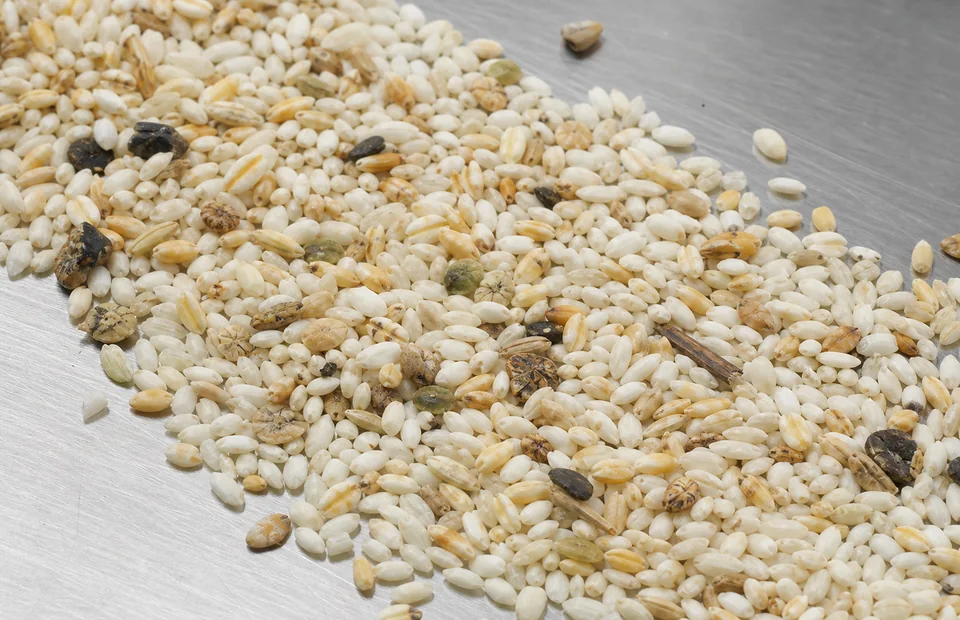
Agricultural materials
Grains, beans & seeds
Rice, wheat, corn, beans, lentils, sesame, quinoa, nuts, kernels, crop seeds and seasonings.
Optical sorting systems
COWPIGGY matches the feed architecture, inspection method and machine scale to how your material moves, what must be removed and the output your line must deliver.
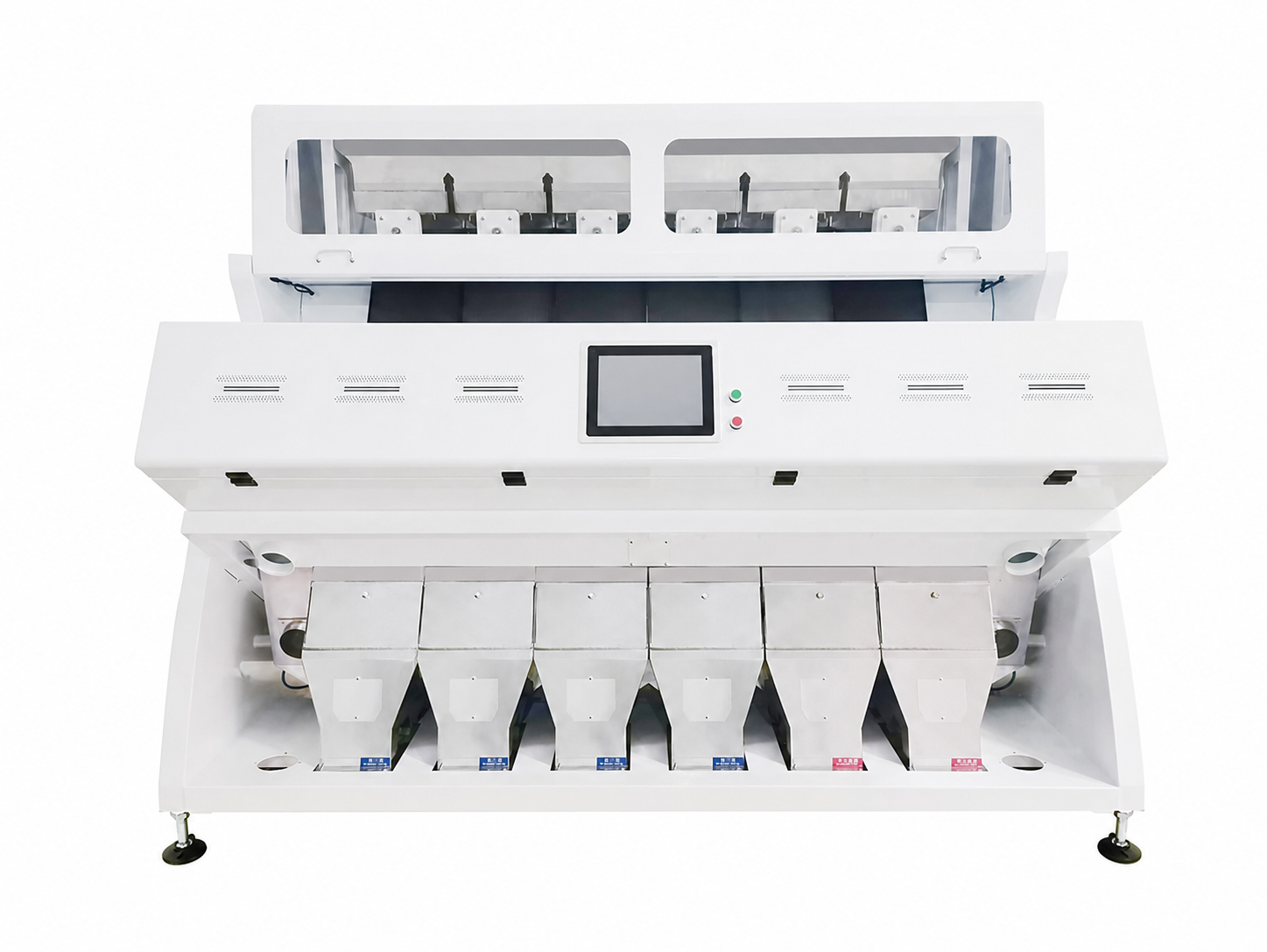
01 / Feed architecture
The inspection technology matters, but only after the product reaches the viewing zone in a stable, separable flow. Shape, fragility, moisture and particle size determine the starting architecture.
For free-flowing grains, beans, seeds, kernels, seasonings and selected industrial granules.
View 12 models → 02 / CPS-BFor fragile, irregular, larger or less free-flowing products that benefit from supported conveying.
View 4 models → 03 / CPS-MApplication-specific handling for ore, glass, slag, scrap metal and selected industrial streams.
View 2 models → 04 / CPS-TA layered path for colour, shape and foreign-material review in tea, botanicals and selected seaweed.
View reference system →02 / Application range
These examples indicate where a feasibility review can begin. Final suitability depends on visible defect contrast, feed stability, product protection and sample-test results.
Rice, wheat, corn, beans, lentils, sesame, quinoa, nuts, kernels, crop seeds and seasonings.
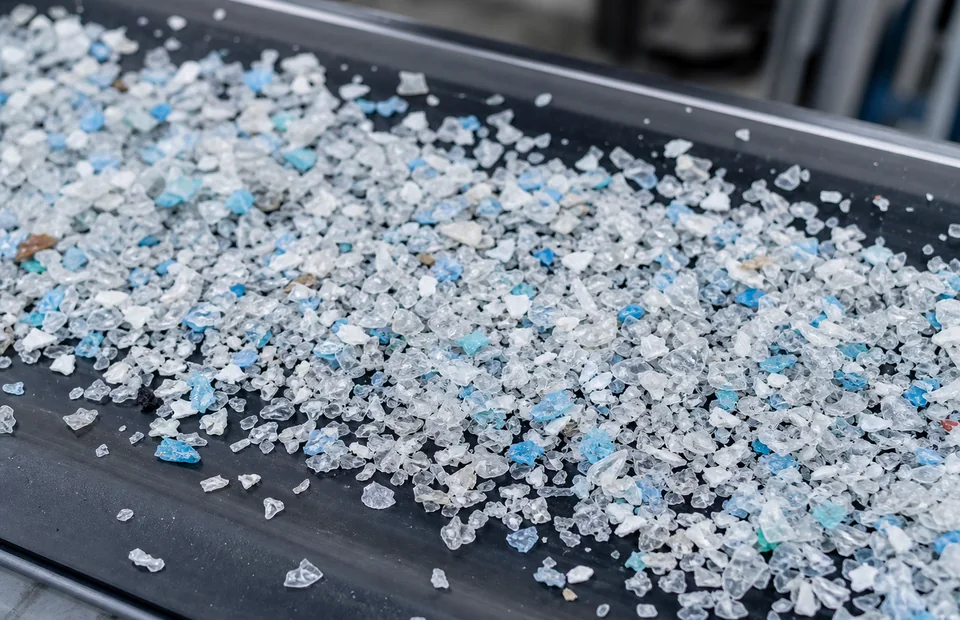
Selected plastic flakes, pellets, wire sheath, tray material, glass and visible contamination streams.
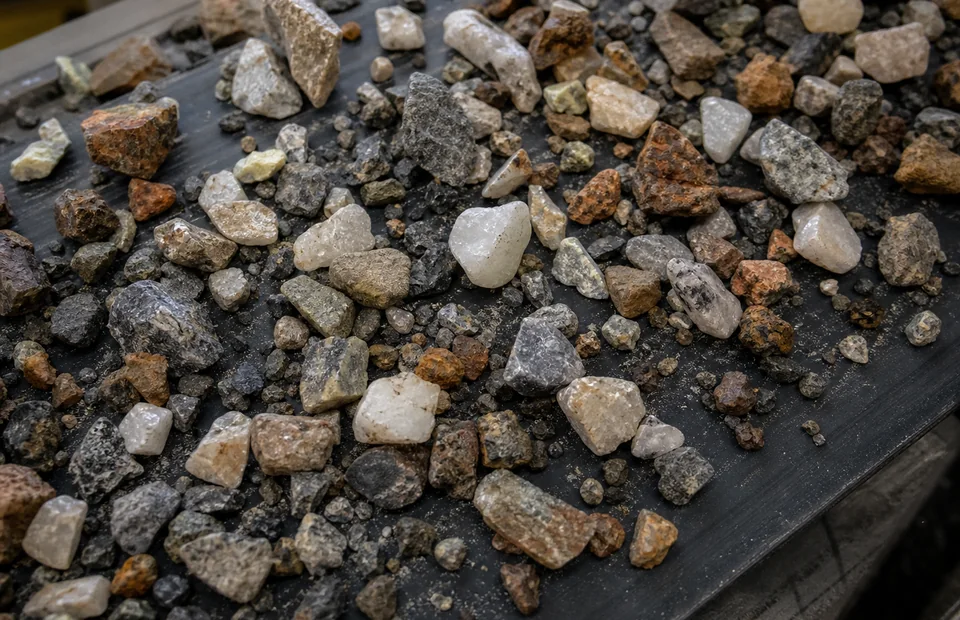
Ore, quartz, feldspar, calcite, glass, slag, refractory material and selected scrap metal.
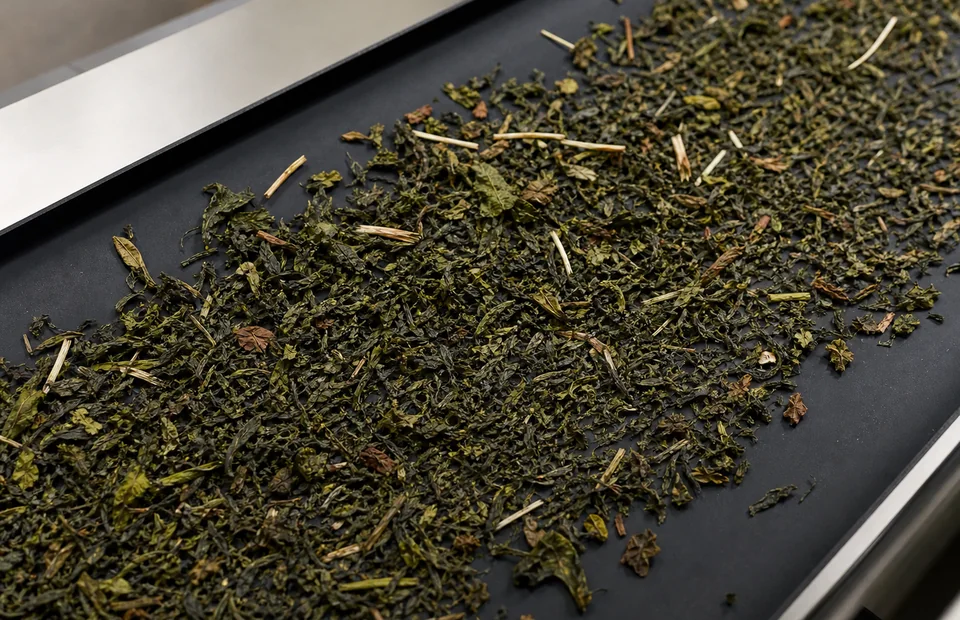
Tea, flower materials, medicinal botanicals, dried or frozen vegetables, nuts and selected seafood.
03 / CPS-V vertical-chute range
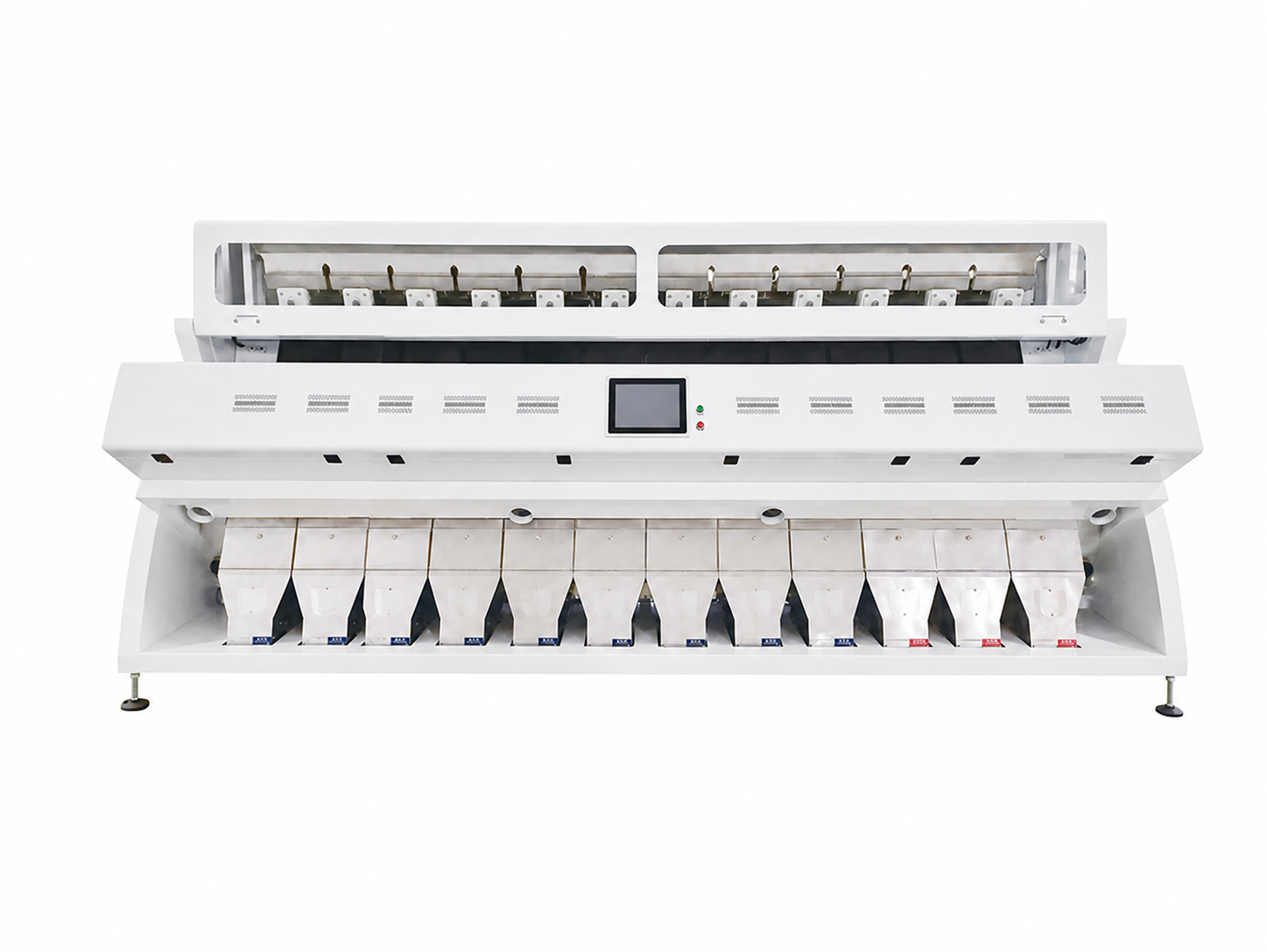
The catalogue range moves from compact 64-channel equipment to a 768-channel platform. Published throughput below is supplier-reference data for standard japonica rice with impurity content within 2%.
For stable free-flowing product streams where individual particles can be presented consistently to the inspection zone.
| Model | Channels | Reference capacity | Power | Approx. weight | Dimensions L×W×H |
|---|---|---|---|---|---|
| CPS-V064 | 64 | 0.9–1.5 t/h* | 1.5 kW | 350 kg | 955×1630×1550 mm |
| CPS-V080 | 80 | 1.0–2.0 t/h* | 1.8 kW | 400 kg | 1045×1630×1550 mm |
| CPS-V096 | 96 | 1.1–2.2 t/h* | 2.0 kW | 420 kg | 1045×1630×1550 mm |
| CPS-V160 | 160 | 1.5–3.2 t/h* | 2.5 kW | 570 kg | 1330×1630×1550 mm |
| CPS-V192 | 192 | 2.0–5.0 t/h* | 3.0 kW | 820 kg | 1717×1619×2042 mm |
| CPS-V256 | 256 | 3.0–6.0 t/h* | 4.0 kW | 1121 kg | 2030×1619×2042 mm |
| CPS-V384 | 384 | 5.0–8.0 t/h* | 5.2 kW | 1246 kg | 2656×1619×2042 mm |
| CPS-V448 | 448 | 6.0–10.0 t/h* | 5.8 kW | 1539 kg | 3149×1620×2032 mm |
| CPS-V512 | 512 | 7.0–11.0 t/h* | 6.5 kW | 1852 kg | 3462×1620×2032 mm |
| CPS-V640 | 640 | 8.0–15.0 t/h* | 8.0 kW | 2335 kg | 4128×1618×2032 mm |
| CPS-V768 | 768 | 10.0–19.0 t/h* | 11.0 kW | 2670 kg | 4698×1618×2032 mm |
* Supplier catalogue reference based on standard japonica rice with impurity content within 2%. Final throughput, carryover and sorting performance vary with the material, defect ratio, feed condition and acceptance standard. Voltage and specifications require project confirmation.
04 / Specialist series
Supported conveying and specialist separation structures extend the application range to fragile, irregular and industrial materials.
For seafood, condiments, medicinal botanicals, nuts, dried or frozen vegetables, plastics, wood and other selected materials.
For ore, glass, slag, scrap metal, selected plastics and refractory materials with application-specific feed and dust-control review.
For tea leaves, flower materials and selected seaweed where colour, stem, size, shape and foreign-material criteria must be coordinated.
* Tea capacity is a supplier reference based on green tea with 3–5% impurity content. † The catalogue wording “layer number” requires supplier confirmation before quotation. CPS-B and CPS-M throughput is not published in the supplied catalogue and is not estimated here.
05 / Inspection layer
Advanced terminology is useful only when it resolves a measurable separation problem. The available inspection layer must be mapped to a confirmed model and sample test.
Configured cameras and illumination distinguish optically visible differences in colour, shape, area, texture and surface condition.
Primary starting pointNear-infrared and selected InGaAs configurations may support differences that are difficult to separate using visible colour alone.
Selected configurationsSingle- or dual-energy X-ray belongs to a separate project review where visible imaging cannot identify the target contamination.
Project-specific optionInfrared, X-ray, cloud connectivity and remote functions are platform capabilities described in the supplier catalogue. Availability is not implied for every model and must be confirmed in the final specification.
06 / Selection path
Photos, video, particle range, moisture, temperature and feeding behaviour.
Send representative good product, defects and foreign material.
Throughput, carryover, product protection, utilities and available space.
Confirm architecture, inspection layer, model scale and test criteria before quotation.
Request an optical sorting review
Share the feed, accepted product, reject examples and target output. COWPIGGY will identify the architecture and test information required next.