Portioned powders in a sealed single-use sachet.
The format suits projects needing more printable area or a broader pack than a narrow stick.
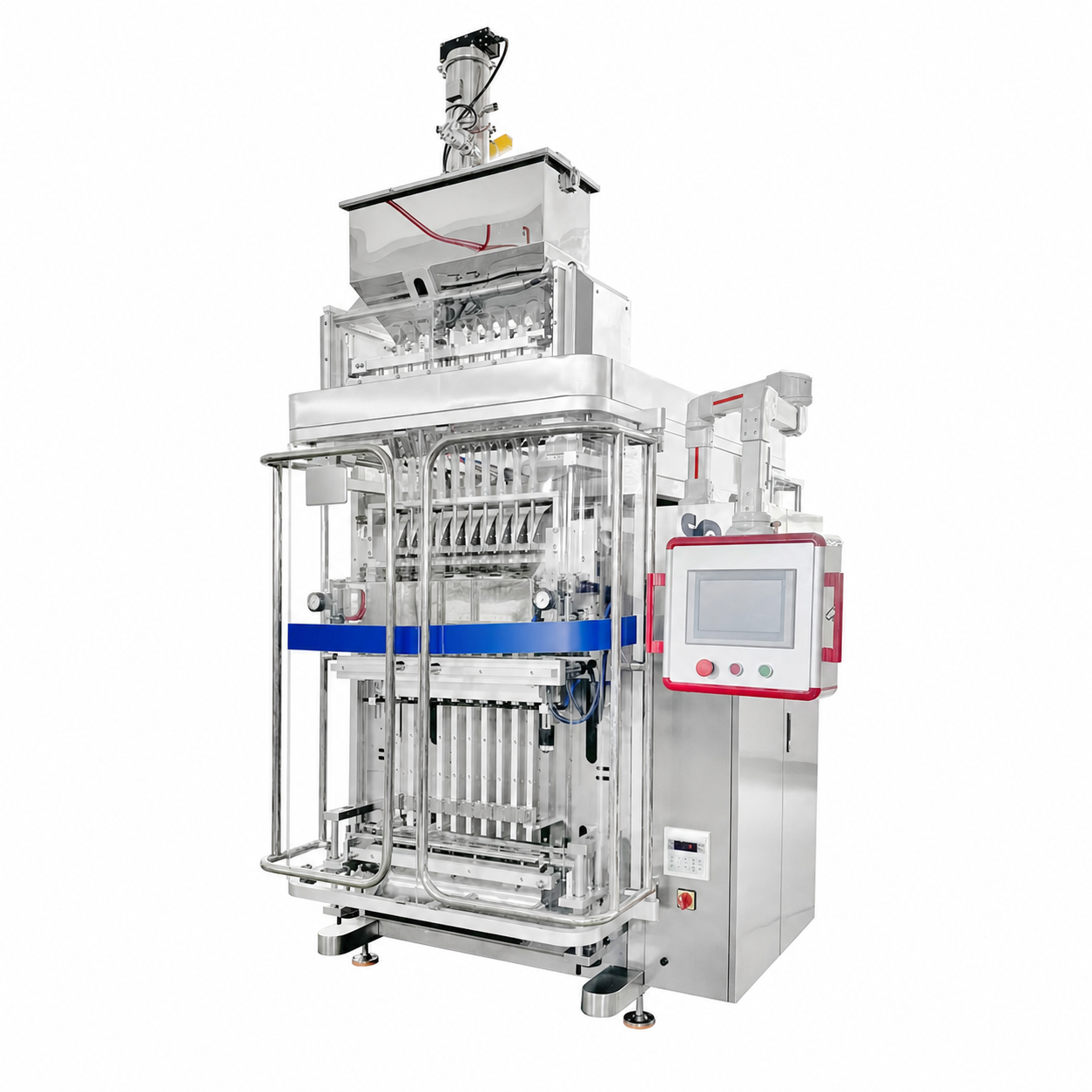
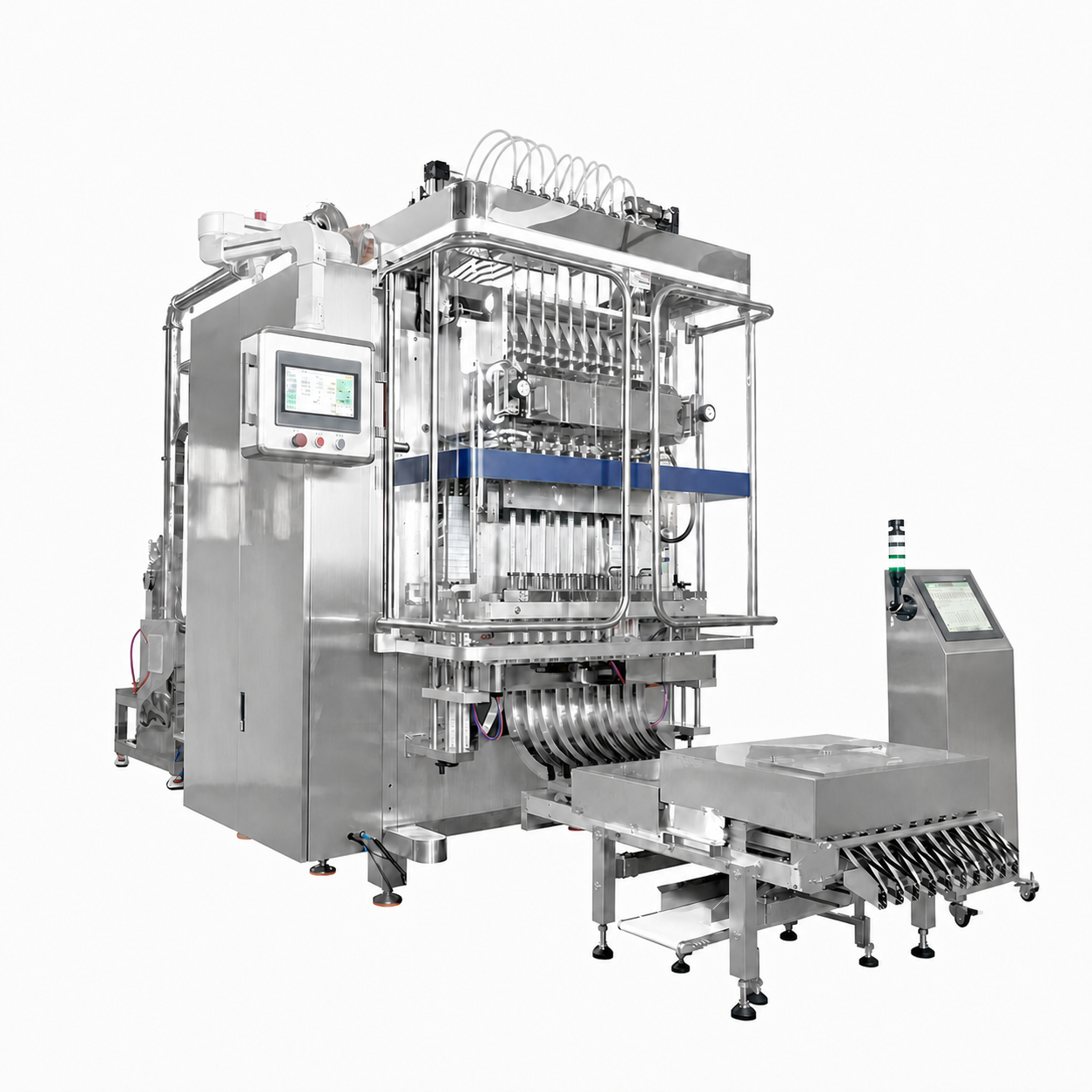
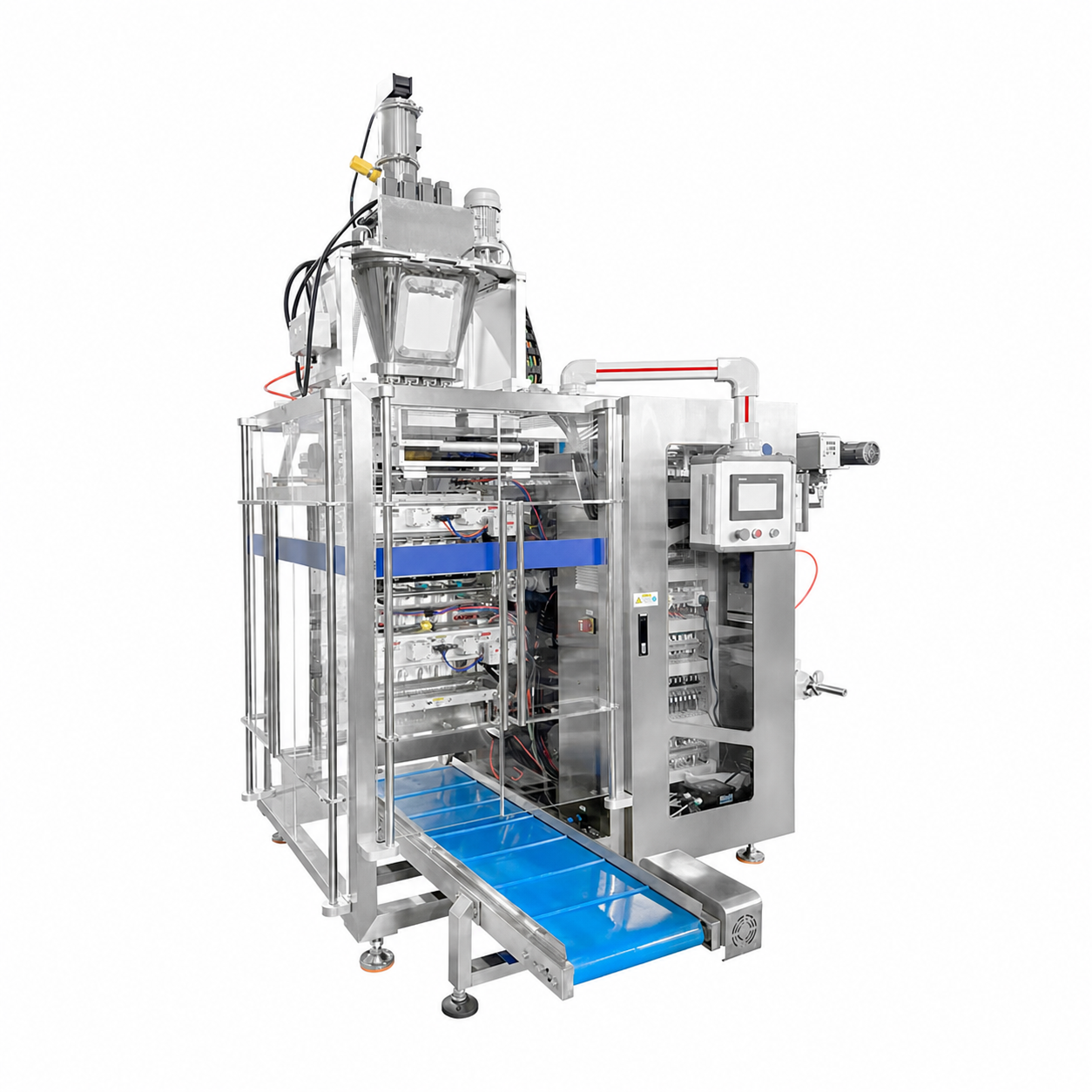
Multi-lane sachet packaging
A wider sealed-pack format for controlled doses across food, nutrition, pharmaceutical and household-product applications—with dosing selected around powder behaviour.
01 / Application fit
Powders that look similar can flow, aerate and compact very differently. The filler, screw geometry, agitation and dust control must be selected from the real product.
The format suits projects needing more printable area or a broader pack than a narrow stick.
Cohesive, aerated or hygroscopic powders may need servo-auger control, agitation, extraction and special cleaning provisions. Product tests should define the realistic speed and tolerance.
02 / Operating principle
The powder path and the film path meet only after each has been stabilised.
A hopper and feed system maintain usable powder supply above the dosing unit.
A servo auger or volumetric cup is matched to flow and accuracy requirements.
The registered film is formed into lanes and receives the measured product.
Controlled heat and pressure form the seal before the selected cut pattern.
03 / Key capabilities
The right solution balances dosing repeatability, clean seals, operator access and changeover effort.
Reference options include servo auger and volumetric cup filling.
The supplier describes configurations from four to twelve lanes, dependent on sachet width.
Servo film pulling and colour-mark control support printed-film positioning.
Controlled seal temperature helps protect the finish across the web.
The reference frame uses stainless steel; contact materials and regulatory scope must be confirmed for each product.
Extraction can be added where airborne powder threatens seals or sanitation.
04 / Reference specification
The supplier states a volumetric dose range; final weight capability must be tested against bulk density.
| Reference capacity | 25–45 cycles/min |
|---|---|
| Sachet length | Maximum 180 mm |
| Sachet width | Maximum 120 mm |
| Filling method | Servo auger filler / volumetric cup filler |
| Supplier-stated range | 1–150 ml |
| Film | Composite film / aluminium film |
| Cutting | Straight / zigzag / continuous |
| Lane reference | 4–12 lanes, dependent on bag width |
| Frame reference | SS304 |
| Control reference | PLC, touchscreen, servo film pulling and colour-mark control |
| Seal control | Independent temperature control |
05 / Configurable scope
These options affect commissioning, housekeeping and downstream automation.
Match the filler to flow and tolerance.
Define the customer interaction with the pack.
Connect identification and verification requirements.
Organise sachets for their final sales unit.
06 / Selection brief
Share both the powder and the finished-pack standard before selecting the filler.
Start my configuration ↗Flowability, bulk density, particle size, moisture, dust and whether it compacts.
Target weight or volume and the acceptable finished-pack deviation.
Width, length, seal layout, film structure, artwork and opening feature.
Cross-contamination controls, sanitation method and acceptable residual product.
Feeding, coding, inspection, counting and secondary packing.
Related systems
Narrow sticks suit free-flowing small doses; liquids require an entirely different filler.
Send a short filling video, sample data and sachet drawing so the filler can be screened correctly.