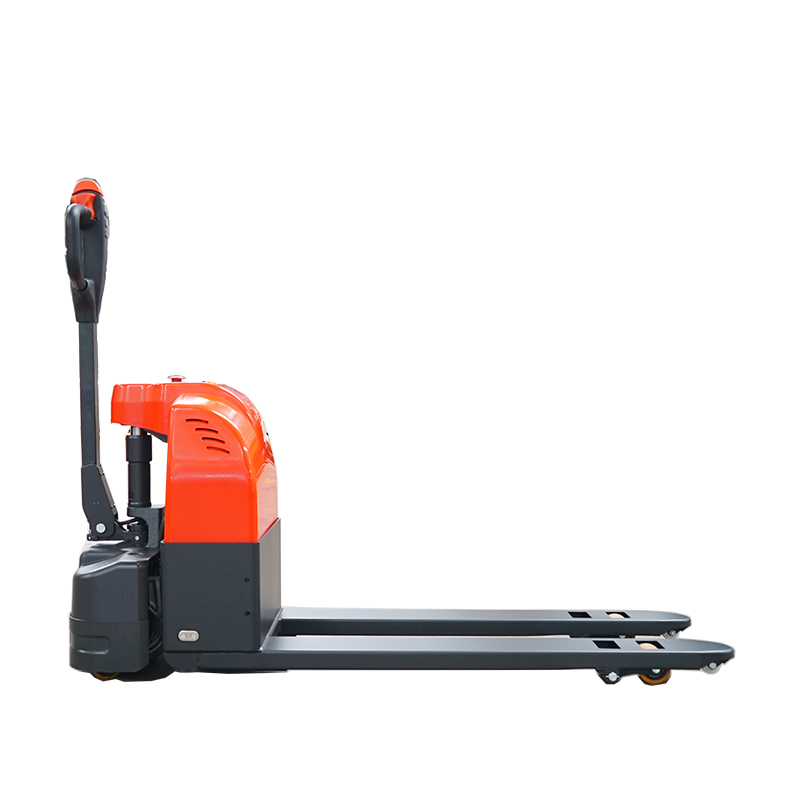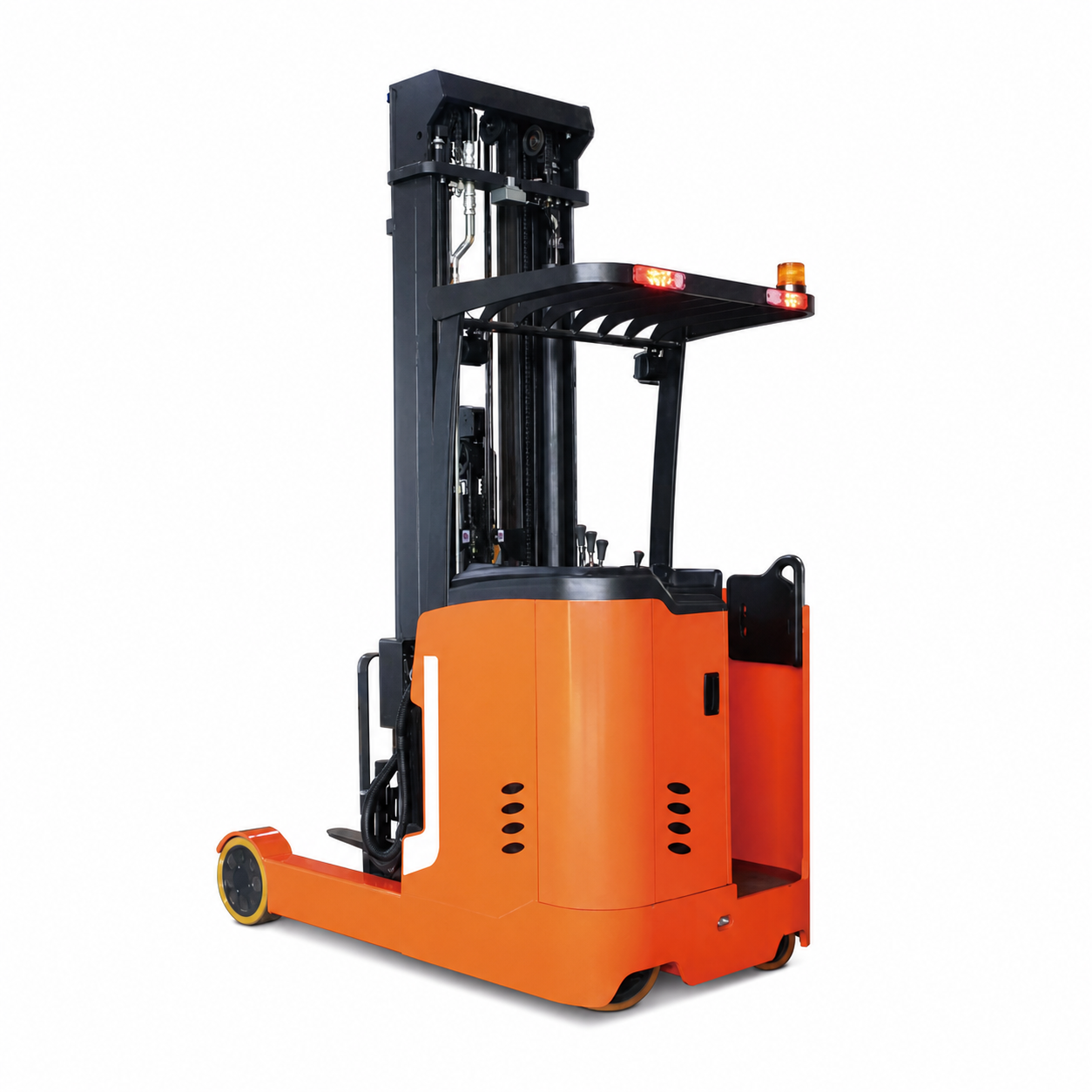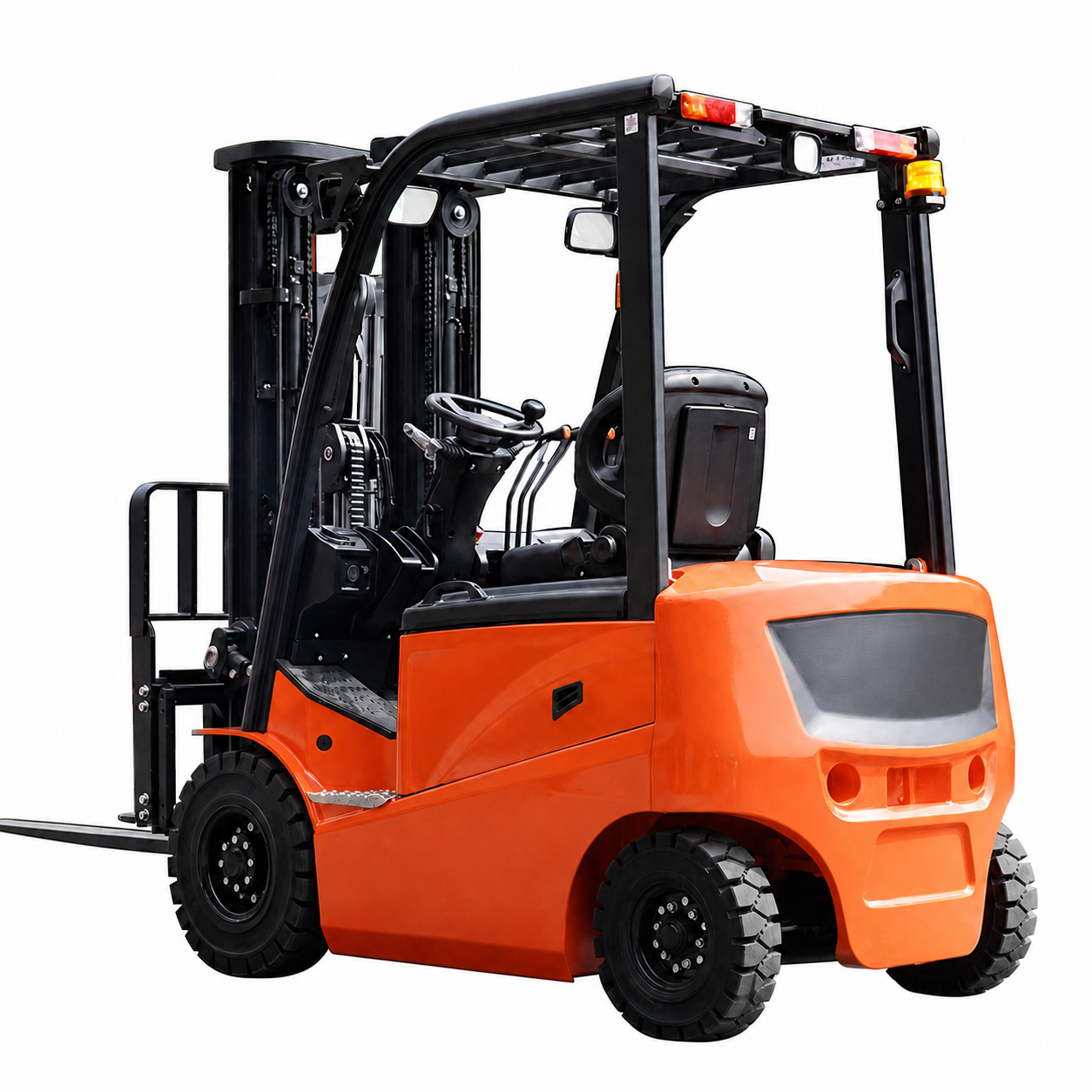
Line-side stacking and low-medium warehouse storage.
Use it where pallets must be raised into racks, platforms or buffers and the approach geometry suits straddle-free pallet entry.
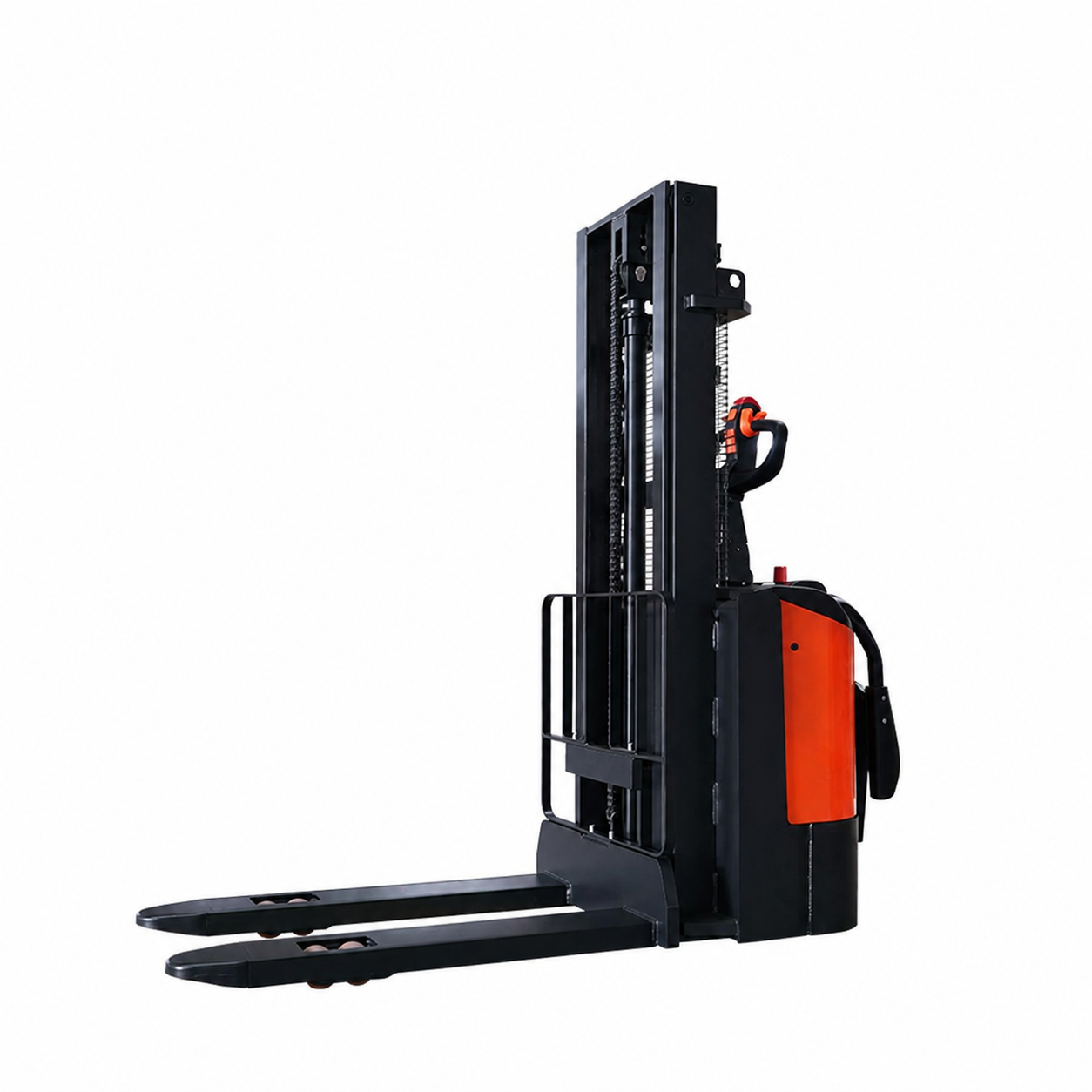
Low and medium pallet stacking
A compact lift vehicle for placing pallets above floor level where a full counterbalance forklift is unnecessary and aisle space matters.
01 / Application fit
A stacker works best with compatible open-bottom pallets and defined rack interfaces. Rated capacity alone does not describe what remains available at the required height.
Use it where pallets must be raised into racks, platforms or buffers and the approach geometry suits straddle-free pallet entry.
Closed-bottom pallets, high lift, uneven floors or frequent long-distance travel may require another family or a different mast and chassis.
02 / Task principle
The stacker’s compactness comes from how its forks, load arms and mast work around the pallet.
Fork and load-arm geometry must match the pallet underside.
The selected mast provides the target fork height while retaining usable capacity.
Aisle width, turning radius and rack clearance control placement.
The pallet is placed, forks withdrawn and mast cleared safely.
03 / Reference features
The reference family combines ride-on support with a relatively narrow body.
The supplier highlights dedicated mast sections for strength and durability.
Operator controls are grouped for travel and lift functions.
A standard platform and protective arms support ride-on operation when appropriate.
The reference specification highlights reinforced protective structure.
External programming access and modular construction support maintenance.
The 2.0 t reference lists a higher-capacity battery option.
04 / Reference specification
Both model columns are retained so the aisle and energy trade-off is visible.
| Parameter | CPH-ST15 | CPH-ST20 |
|---|---|---|
| Rated capacity | 1.5 t | 2.0 t |
| Load centre | 600 mm | 600 mm |
| Lift height | 1,600–3,600 mm | 1,600–3,600 mm |
| Lowered fork height | 85 mm | 85 mm |
| Overall width | 820 mm | 820 mm |
| Fork size | 60 / 180 / 1,150 mm | 60 / 180 / 1,150 mm |
| Fork outside width | 570 / 685 mm | 570 / 685 mm |
| Aisle: 1,000 × 1,200 crosswise | 2,330 mm | 2,545 mm |
| Aisle: 800 × 1,200 lengthwise | 2,275 mm | 2,520 mm |
| Turning radius | 1,487 mm | 1,670 mm |
| Gradeability loaded / unloaded | 5 / 10% | 5 / 10% |
| Battery reference | 24 V / 106 Ah | 24 V / 106 Ah; 210 Ah option listed |
05 / Project configuration
A stacker is selected around the load at height, not the floor-level capacity label.
Set the lift envelope.
Verify physical compatibility.
Model the actual placement movement.
Protect availability.
06 / Selection brief
A front view and plan view of the rack make the lift requirement measurable.
Start my fleet brief ↗Maximum weight, pallet dimensions and centre of gravity.
Beam heights, top load level, clear opening and pallet support.
Clear width, turns, entrances and mast-height constraints.
Lifts per hour, travel distance, shifts and charging time.
Floor, temperature, dust, moisture and controlled-zone requirements.
Related vehicles
Use floor transport below the rack and reach equipment when height or aisle pressure increases.
Send the pallet underside, rack drawing, lift height and aisle width for review.