Loading, production support and mixed indoor handling.
Use it where the truck must approach pallets, stillages or loads without support legs underneath.
General-purpose pallet handling
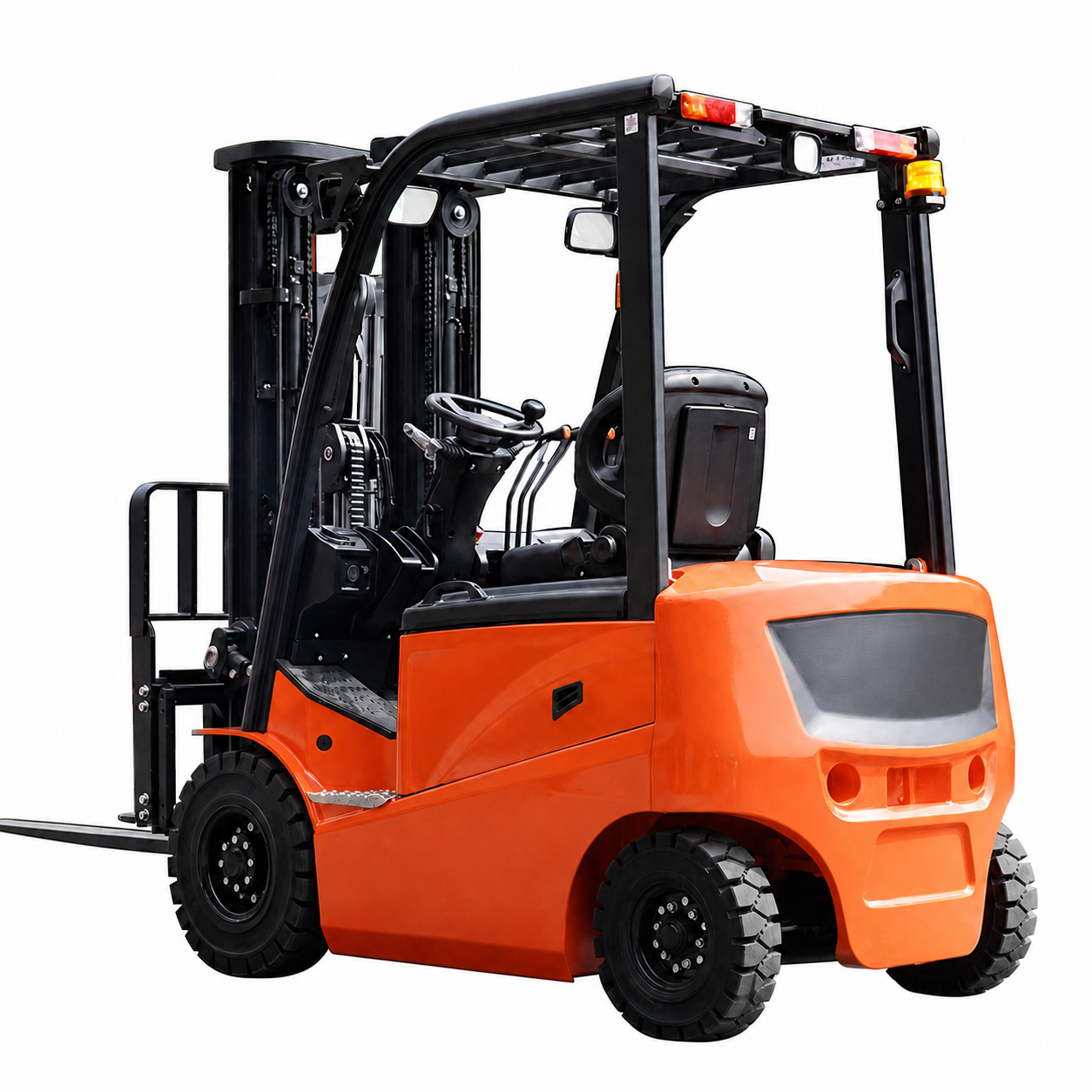
A four-wheel seated truck with free fork approach for loading, production, yard and mixed pallet tasks—without load arms beneath the pallet.
01 / Application fit
The counterbalance layout can enter many pallet and load types directly. Its trade-off is a larger turning envelope than compact stackers or specialised reach trucks.
Use it where the truck must approach pallets, stillages or loads without support legs underneath.
High racks, very narrow aisles, freezer duty, wet washdown or outdoor gradients may require a different family or configuration.
02 / Task principle
The chassis provides rear counterweight so the forks can approach the load without forward support legs.
Fork length, spread and attachment are matched to the pallet or unit load.
Mast height, load centre and attachment determine residual capacity.
Floor, gradients, speed zones and visibility shape safe operation.
Free approach supports loading bays, stacks, racks and production equipment.
03 / Reference features
The reference family targets general-purpose use with service access and battery choice.
A conventional four-point chassis supports general material-handling tasks.
The supplier highlights operator-focused seating and controls.
Lead-acid is listed as standard with lithium available as an option.
The family is promoted around convenient maintenance access.
Two capacities cover common industrial pallet loads.
Side shift, clamps or other attachments alter capacity and must be engineered.
04 / Reference specification
Compare both capacities and note the change in weight, length and fork size.
| Parameter | CPH-CB16 | CPH-CB20 |
|---|---|---|
| Rated capacity | 1.6 t | 2.0 t |
| Service weight incl. battery | 2,940 kg | 3,180 kg |
| Mast lowered height | 2,053 mm | 2,053 mm |
| Reference lift height | 3,000 mm | 3,000 mm |
| Overall length | 3,050 mm | 3,200 mm |
| Overall width | 1,150 mm | 1,150 mm |
| Fork size | 35 / 100 / 920 mm | 40 / 120 / 1,070 mm |
| Fork carriage width | 1,040 mm | 1,040 mm |
| Turning radius | 1,990 mm | 1,990 mm |
| Travel speed loaded / unloaded | 12 / 13 km/h | 11 / 13 km/h |
| Lift speed loaded / unloaded | 0.27 / 0.35 m/s | 0.25 / 0.35 m/s |
| Battery | Lead-acid standard; lithium option listed | Lead-acid standard; lithium option listed |
05 / Project configuration
Attachments and mast choices can change the headline capacity substantially.
Define both lift and clearance.
Set fork and attachment requirements.
Choose for the real shift.
Align materials, tyres and traffic controls.
06 / Selection brief
Provide the heaviest load, highest placement point and tightest route.
Start my fleet brief ↗Weight, dimensions, pallet or stillage and any offset centre.
Top fork height, residual capacity and free-lift needs.
Aisles, turns, gradients, dock plates and indoor/outdoor transitions.
Side shift, positioner, clamp or specialised load handling.
Shifts, travel, lift cycles, charging windows and electrical supply.
Related vehicles
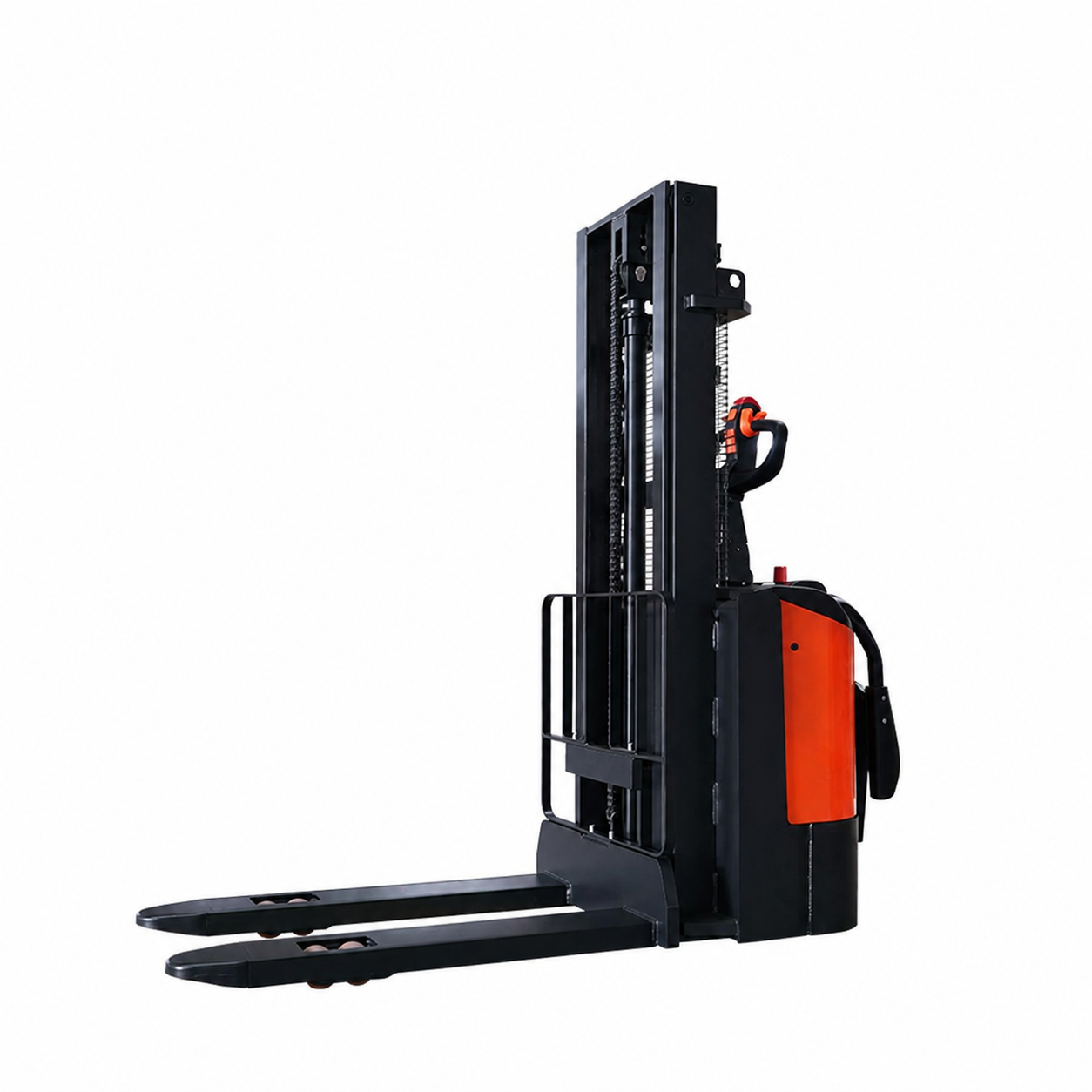
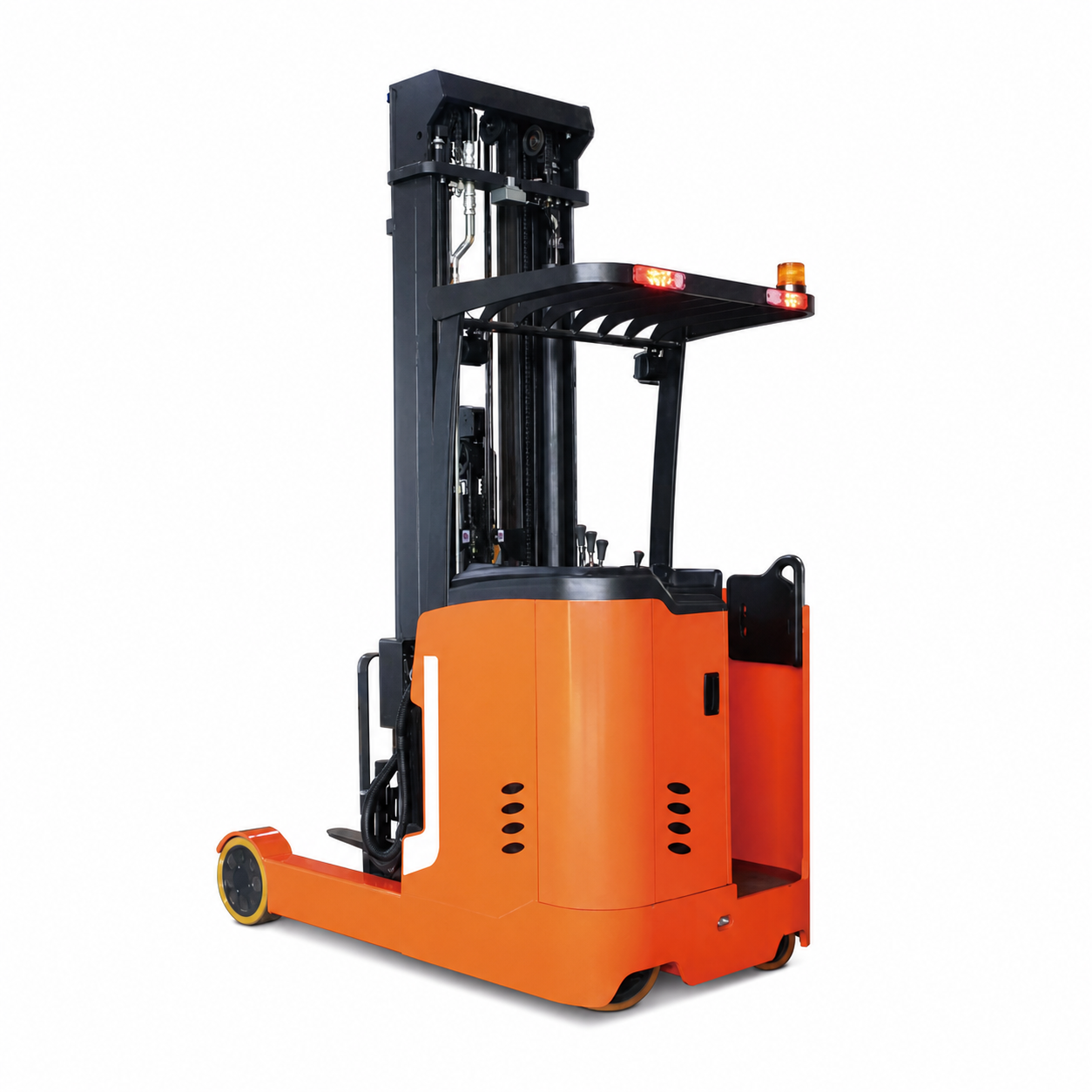
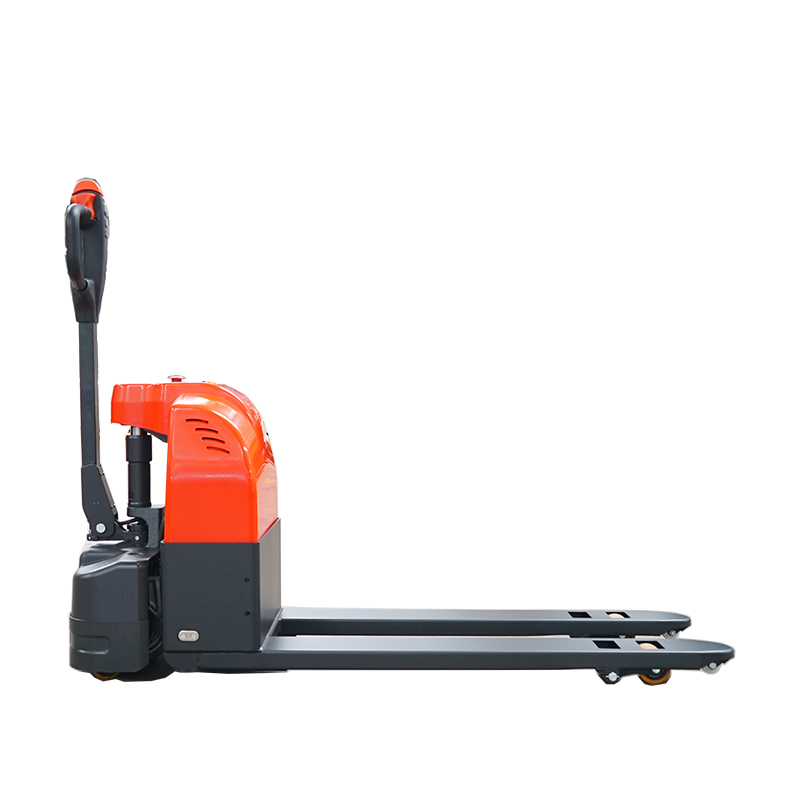
Compact stackers reduce footprint; reach trucks target higher racks.
Send the load, mast, attachment and route data for a residual-capacity review.